



- Company Number: OC368927
- Registered Address: C/O Streets Whittles, The Old Exchange, 64 West Stockwell Street, Colchester, Essex, England, CO1 1HE
- Website: https://new-linkconsulting.com/
Download Plan

Founded in 2011, New Link Consulting LLP was established by industry practitioners who recognised the need for a consultancy that could deliver greater value through a unique approach, distinct from conventional, methodology-driven models. Our mission is clear: to uncover opportunities others may overlook and to build our business around these insights. We are relentless in our pursuit of these opportunities, always aiming to maximise benefits for our clients. With exceptional industry knowledge, professional commitment, and an ability to adapt to market changes, we strive to make a meaningful impact on both our clients and the industry.
As we continue to drive business transformation, we are equally committed to our carbon reduction planning. We recognise that addressing environmental challenges is not only a necessity but an opportunity to lead by example. Our team, which embodies the values expected of top consultants—client focus, high-quality solutions, and unwavering integrity—also embraces sustainability as a core principle. With deep industry knowledge and a relentless drive to effect real business change, we integrate carbon reduction strategies into our operations, ensuring that our entrepreneurial spirit fuels both innovation and environmental responsibility. This includes the accurate assimilation and collation of emissions data, now in our third year of reporting.
Our 2025 emissions reporting shows an overall decrease in our emissions driven essentially by the change in our operating model aligned to our client’s demands, further improved reporting and a consistent focus on embedding a culture of upheld environmental policy.
Our 2025 emissions report, encompassing January to December, reveals a decrease from a direct result of further implementation of more comprehensive and holistic tracking measures across our organisation, allowing for a more accurate and thorough assessment of our emissions and strengthening our commitment to sustainability. We've integrated these tracking policies with our emissions training and reporting programs, ensuring organisation-wide awareness and accountability. To reflect these changes, we're updating our internal policies with relevant measures. A key strategic focus is our supply chain, where we're prioritising rigorous vetting of supplier emissions. This enhanced visibility allows us to identify and target specific areas for reduction, demonstrating our commitment to environmental responsibility.
New Link Consulting LLP is committed to achieving Net Zero emissions by 2040.
The period 1st January to 31st December 2023 was our initial baseline reporting and first year of reporting. This timeframe serves as the cornerstone of our sustainability journey, providing a comprehensive and accurate snapshot of our carbon footprint. By establishing 2023 as the Baseline Year, we have created a clear reference point against which future emission reductions can be measured and tracked. This strategic decision reflects our dedication to transparency and accountability in our sustainability efforts, ensuring that we can effectively monitor progress as we work towards our long-term environmental goals.
| Baseline 2023 | 2024 | |
|---|---|---|
| Scopes and categories | Metric tons CO₂e | Metric tons CO₂e |
| Scope 1: Direct emissions from owned/controlled operations | 0.00 | 0.00 |
| Scope 2: Indirect emissions from the use of purchased electricity, steam, heating, and cooling | 0.00 | 0.90 |
| Scope 3 emissions | ||
| Category 1: Purchased goods and services | 0.00 | 0.00 |
| Category 2: Capital goods | 0.00 | 0.00 |
| Category 3: Fuel- and energy-related activities (not included in scope 1 or scope 2) | 0.00 | 1.31 |
| Category 4: Upstream transportation and distribution | 0.00 | 0.00 |
| Category 5: Waste generated in operations | 0.00 | 0.00 |
| Category 6: Business travel | 0.0833 | 4.81 |
| Category 7: Employee commuting – Local Bus Work From Home |
0.0054 0.3880 |
11.42 45.08 |
| Other Hotel Stay | 0.0936 | 0.28 |
| Category 8: Upstream leased assets | 0.00 | 0.00 |
| Category 9: Downstream transportation and distribution | 0.00 | 0.00 |
| Scope 1 | 0.00 | 0.00 |
| Scope 2 | 0.00 | 0.90 |
| Scope 3 | 0.5727 | 63.03 |
| Total | 0.5727 tCO₂e | 63.93 tCO₂e |
Note: The baseline preliminary emissions assessment reflects limited data due to our early-stage collation process. While the results were modest, we acknowledge the department's diligent effort in initiating this vital reporting. Our data collection has matured and proceeding years’ reporting represents more comprehensive and accurate assessments.
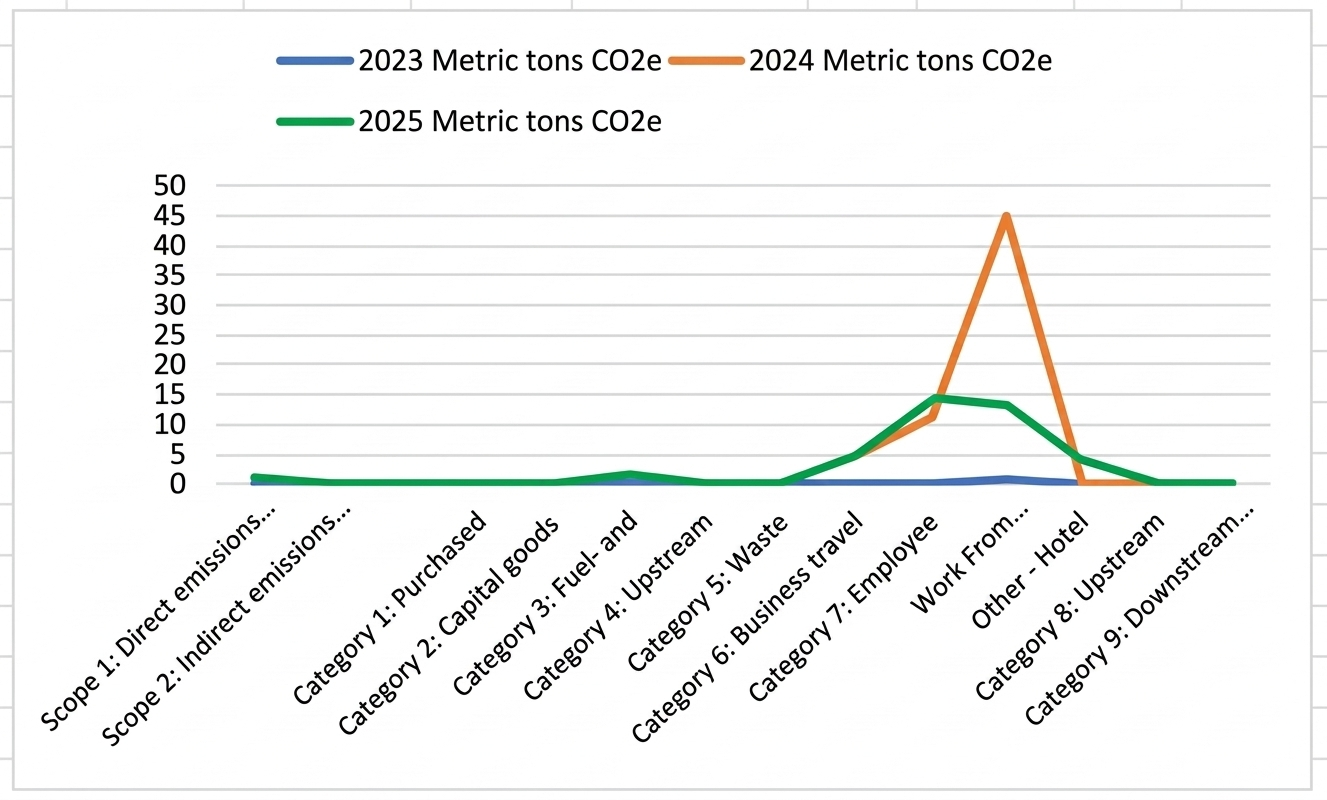
While this improved methodology offers greater transparency, it also revealed a substantial increase in emissions from Baseline to 2024, our second year of reporting, particularly within Scope 3. The spike was attributed to the inclusion of previously unmeasured categories, such as work-from-home energy consumption and a more granular analysis of business travel.
| Scopes and categories | Metric tons CO₂e |
|---|---|
| Scope 1: Direct emissions from owned/controlled operations | 0.00 |
| Scope 2: Indirect emissions from the use of purchased electricity, steam, heating, and cooling | 0.90 |
| Scope 3 emissions | |
| Category 1: Purchased goods and services | 0.00 |
| Category 2: Capital goods | 0.00 |
| Category 3: Fuel- and energy-related activities (not included in scope 1 or scope 2) Water & Wastewater | 1.31 |
| Category 4: Upstream transportation and distribution | 0.00 |
| Category 5: Waste generated in operations | 0.00 |
| Category 6: Business travel - Air | 4.93 |
| Category 7: Employee commuting – Land Work From Home |
14.105 13.3 |
| Other Hotel Stay | 3.76 |
| Category 8: Upstream leased assets | 0.00 |
| Category 9: Downstream transportation and distribution | 0.00 |
| Scope 1 Total | 0.00 |
| Scope 2 Total | 0.90 |
| Scope 3 Total | 37.405 |
| Total | 38.305 tCO₂e |
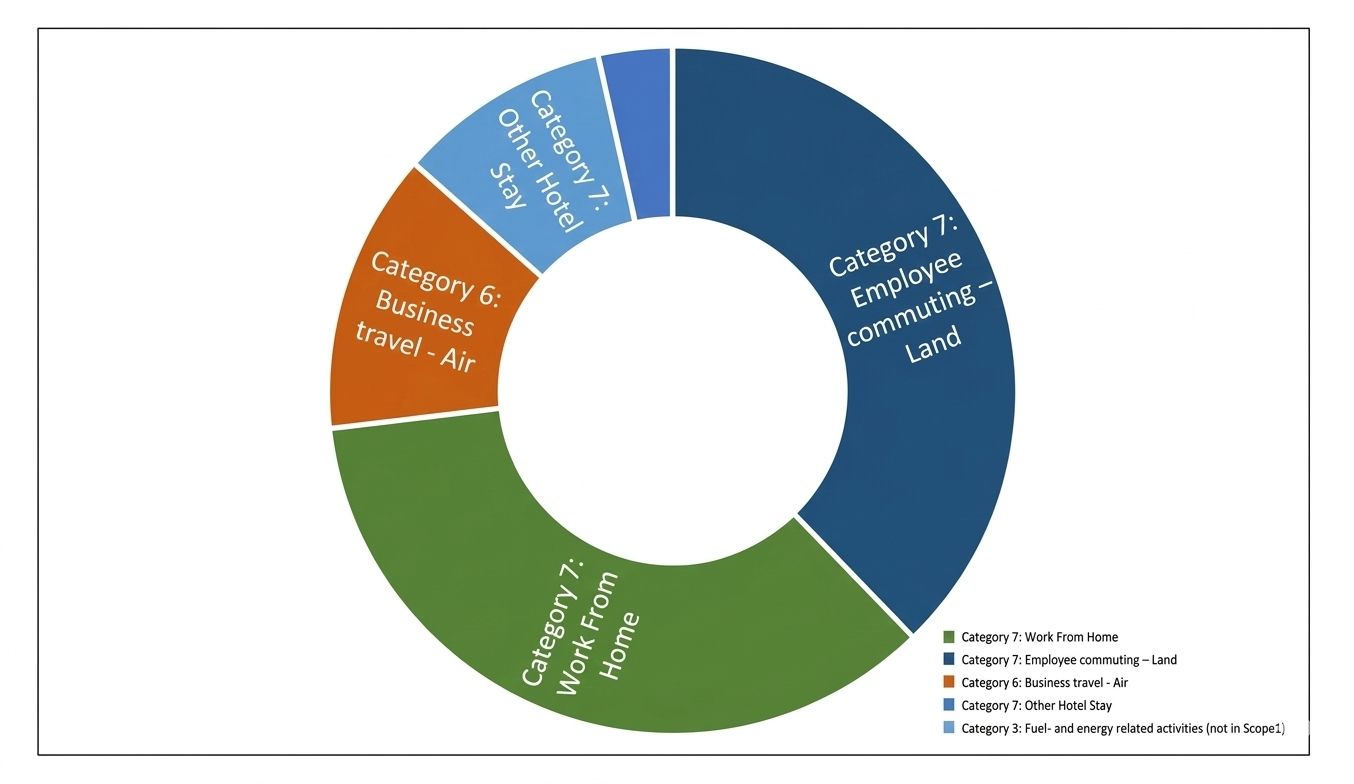
Our 2025 emissions inventory further demonstrates our advancement in data collection and reporting methodology, resulting in a more refined and accurate representation of our carbon footprint. We've transitioned from relying on industry averages for key categories to employing specific data sources and established emission factors. This enhanced approach includes utilising distance-based calculations for business travel and employee commuting, categorised by vehicle type for increased precision. Notably, we've incorporated emissions from work-from-home activities, previously unaccounted for, providing a more comprehensive view of our Scope 3 emissions.
During 2025 the reporting methodology has been further enhanced particularly impacting the work from-home activity reporting; prior years there was no deduction for employee holidays per annum and thus figures were over inflated representing a substantial decrease in the Scope 3 emissions for current year reporting. This highlights the importance of robust data collection for effective emissions management and targeted reduction strategies. Moving forward, we will leverage this enhanced inventory to prioritise emission hotspots and develop data-driven solutions.
Scope 1: Direct emissions from owned/controlled operations – Our business activities, by their inherent nature, do not generate emissions within this scope.
Scope 3:
Category 1: Purchased goods and services - Through detailed and accurate accounting of all purchased goods and services, and through working with our suppliers to gain their emissions data, we have accurately calculated that our scope 3 category 1 emissions are zero.
Category 2: Capital Goods:
Category 4: Upstream Transportation and Distribution:
Category 5: Waste Generated in Operations:
Category 8: Upstream Leased Assets:
Category 9: Downstream Transportation and Distribution:
To calculate emissions for New Link Consulting LLP, the following methods and references are typically employed:
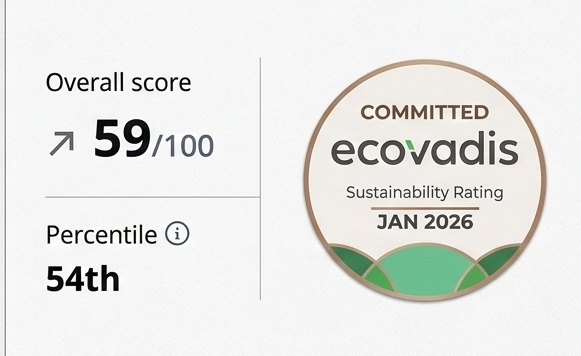
On 20th December 2025, New Link Consulting LLP achieved an EcoVadis sustainability assessment score of 59/100, 4 points increase on the prior year score, maintaining our position in the 54th percentile. This increased scoring resulted in the receipt of a ‘Committed Badge’, recognising the strong foundation in managing environmental, social, and governance (ESG) criteria, achieving a score of 45 or higher, indicating "Good" performance and a solid commitment to sustainability beyond just basic compliance, showing it is integrated into our business. This demonstrates our continued commitment to sustainable practices and building upon the strong foundation established in second year of assessment.
New Link Consulting LLP: Year-on-Year Emissions Reduction Plan (Net-Zero by 2040)
Using updated Baseline (2025):38.305metric tons CO2e
Key Assumptions/Achievements:
Year-on-Year Targets:
Key Considerations:
Reporting and Review:
By adhering to this plan, New Link Consulting LLP can demonstrate its commitment to climate action and achieve its net-zero target by 2040.
The NLC Board has established a dedicated Sustainability Steering Committee led by Business Management, which ensures diligent oversight and reporting of our environmental and social initiatives. The Carbon Reduction Plan (PPN06/21), incorporating ESG reporting, is now a core component of our governance, complementing our updated sustainability policy as well as maintaining our ISO 14001 accreditation. This has been integrated into our annual reporting cycle, strengthening
our commitment to ongoing monitoring and responsible corporate governance. To enhance this, we have implemented day one employee sustainability training and more stringent supply chain vetting. This strategic shift underscores our dedication to transparency, continuous improvement, and verifiable progress in our sustainability performance.
New Link Consulting LLP with its newly formed sustainability Steering Committee is committed to maintaining and enhancing its carbon neutrality through focused reduction targets but also understands that with an already low carbon footprint there are minimal areas for improvement. However, building on its current baseline of zero emissions, the company aims to:
In line with updates to ISO management system standards introduced in February 2024, requiring organisations to consider climate change within the analysis of the Context of the Organisation, NLC has assessed climate-related risks through a SWOT analysis. This analysis supports the Carbon Reduction Plan to ensure that environmental considerations are integrated into strategic planning, operational decision-making and sustainability governance. The analysis reflects the reality of NLC as a professional services consultancy with a carbon footprint primarily driven by Scope 3 emissions.
Strengths: NLC has a relatively low operational footprint and no direct operational emissions from owned facilities or production activities. We have established governance structures to support sustainability objectives, including a Carbon Reduction Working Group who are responsible for oversight of initiatives. Emissions reporting capabilities have improved through enhanced data collection and monitoring of business travel and remote working activity. Accreditation to ISO 14001 provides a structured framework for environmental management and continuous improvement.
Weaknesses: The majority of NLC’s Scope 3 emissions sources are business travel, employee commuting and accommodation linked to client engagements. These emissions are influenced by client requirements and operational demands, limiting NLC’s direct control over some reduction measures. Multiple emissions categories also rely on supplier-provided data, which can affect the completeness and accuracy of reporting.
Opportunities: Greater use of remote collaboration technologies and digital delivery of consulting services would reduce the need for travel where appropriate. NLC has opportunities to strengthen supplier engagement by encouraging improved emissions transparency and environmental commitments across the supply chain. Continued endorsement of sustainable travel practices, such as prioritising rail travel, supports progress towards emissions reduction targets.
Threats: Client expectations for on-site engagement may continue to require travel. Business growth and increased client activity may also lead to higher absolute emissions despite efficiency improvements. Additionally, evolving sustainability regulations and reporting expectations may increase compliance requirements, while progress in reducing certain emissions remains partly dependent on the environmental performance of suppliers and partners.
This Carbon Reduction Plan has been completed in accordance with PPN 06/21 and associated guidance and reporting standard for Carbon Reduction Plans.
Emissions have been reported and recorded in accordance with the published reporting standard for Carbon Reduction Plans and the GHG Reporting Protocol corporate standard1 and uses the appropriate Government emission conversion factors for greenhouse gas company reporting2.
Scope 1 and Scope 2 emissions have been reported in accordance with SECR requirements, and the required subset of Scope 3 emissions have been reported in accordance with the published reporting standard for Carbon Reduction Plans and the Corporate Value Chain (Scope 3) Standard3.
This Carbon Reduction Plan has been reviewed and signed off by the board of directors (or equivalent management body).
Signed by:

Name: Richard Spencer
Position: Managing Partner
Date: 06 March 2026 | 09:08 GMT